Same-Day Appointments Available

How to Prepare for a Dental Crown Procedure: A Step-by-Step Guide
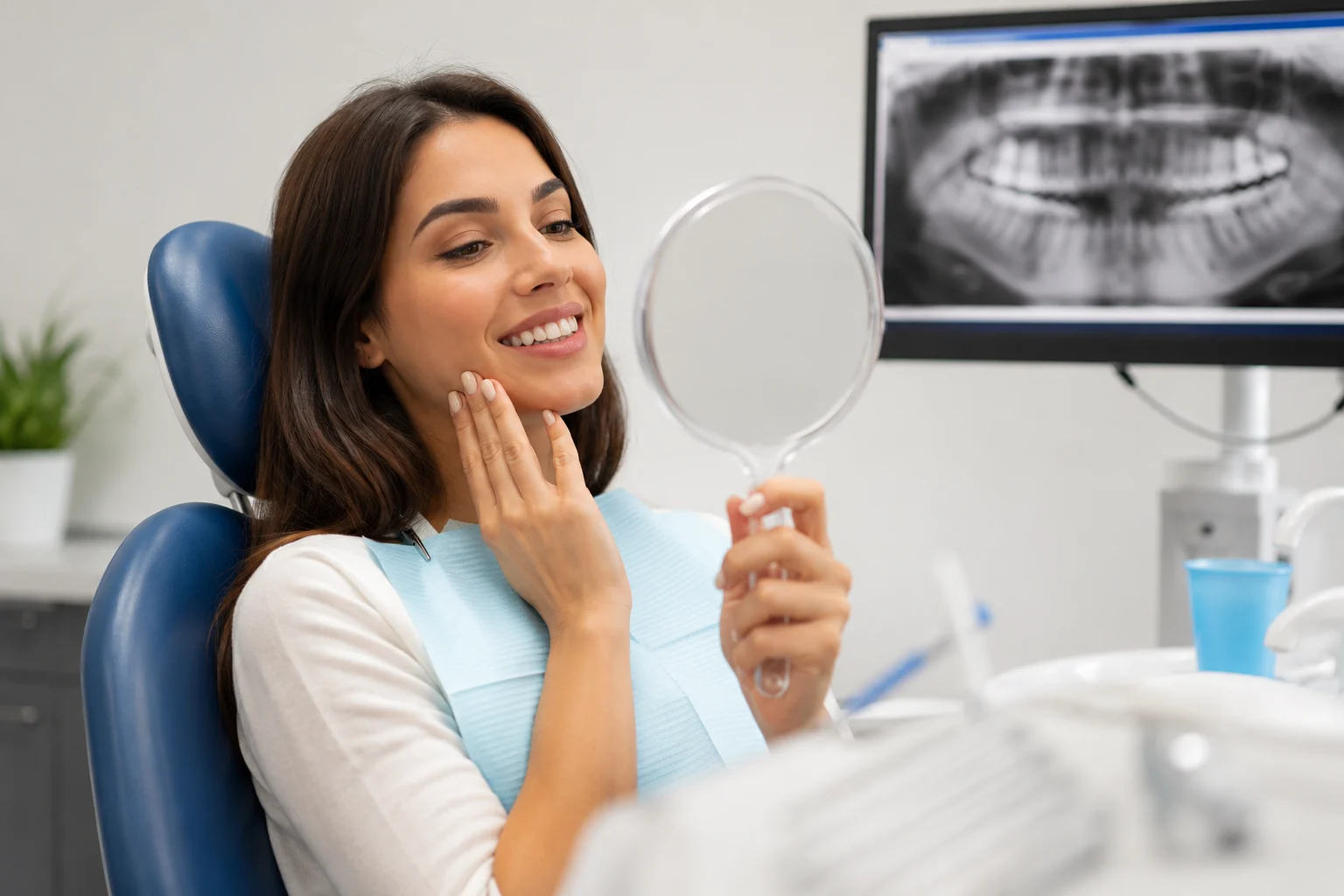
Most people who find out they need a dental crown feel two things at once: relief that there is a solution, and dread about the appointment itself. That second feeling almost always comes from not knowing what is going to happen in the chair.
This guide fixes that. Dr. Kinjal Patel at Varni Dental walks you through exactly how to prepare for a dental crown procedure -- what to eat, what to tell your dentist, what the crown prep procedure involves step by step, and what to watch for once you leave. By the time you sit down for your appointment, none of this will be a mystery.
That matters more than you might expect. Patients who know what is coming report less anxiety and recover faster. So read this before your appointment, not after.
What Is a Crown Prep Procedure?
A dental crown is a tooth-shaped cap placed over a damaged, weakened, or root canal-treated tooth. Before that cap can go on, the tooth underneath has to be reshaped. That reshaping appointment is called crown prep, short for crown preparation.
During crown prep, your dentist files down the outer layer of the tooth so the crown has space to sit over it without raising your bite. Think of it like sanding down a piece of wood so a lid fits flush. The crown cannot simply go on top of the natural tooth structure; there would not be enough room, and your bite would feel wrong.
The preparation is what makes the crown work properly. If the tooth is not filed to the right shape and dimensions, the crown will not seat correctly. A poorly fitting crown changes how your upper and lower teeth come together, which creates wear, jaw discomfort, and sometimes headaches over time.
Crown prep is typically the first of two appointments for a dental crown procedure, though same-day options do exist. More on that below.
Same-Day Crown vs. Two-Visit Crown: Which Are You Getting?
This distinction is worth clarifying before your appointment because your preparation looks slightly different depending on which path you are taking.
Traditional two-visit crowns work like this: at the first appointment, your tooth is prepped, an impression is taken, and a temporary crown is placed over the reshaped tooth. The impression goes to a dental lab, which fabricates your permanent crown over about one to two weeks. You return for a second, shorter appointment to have the permanent crown cemented in.
Same-day crowns (CEREC) skip the lab entirely. Instead of a physical putty impression, your dentist takes a digital 3D scan of the prepped tooth right in the office. That scan feeds into an in-office milling machine, which carves your crown out of a ceramic block while you wait. The whole thing from prep to permanent crown happens in one appointment, usually two to four hours.
Neither option is inherently better. The right choice depends on which tooth needs the crown, the material that suits your situation, and what your dental practice offers. If you are not sure which path you are on, ask at your consultation. Knowing ahead of time helps you plan your day the right way.
Before Your Appointment: A Pre-Crown Checklist
Good preparation covers three areas: what you communicate to your dentist, what you arrange for the day itself, and how you mentally get ready. Most people handle the first two and skip the third. Do not do that.
Tell Your Dentist These Things in Advance
Your dentist needs a current picture of your health before starting crown prep. If your intake paperwork was filled out months ago, it is worth a quick call to flag anything that has changed.
Blood thinners or daily aspirin - These affect how much the gum tissue bleeds during prep. Your dentist may ask you to hold a specific medication the morning before, or they may simply need to know so they can plan for it. Do not make this call yourself; let your dentist guide you.
Latex allergy - Dental gloves and some impression materials contain latex. Flagging this before you arrive means the team can switch to latex-free supplies before you walk in the door.
Reactions to anesthetics - Some patients have needed significantly more numbing agent than average, or have had reactions to certain types. Mention this. Your dentist can adjust the type or dosage in advance rather than troubleshooting mid-appointment.
Anxiety history - Dental anxiety is real. Research published in the Journal of Dental Research estimates that roughly 36% of adults experience some degree of it. If you are in that group, say so before your appointment starts. Nitrous oxide, oral sedation, and other options are available at many practices and can make the appointment genuinely manageable rather than something to white-knuckle through.
Handle the Practical Logistics
Eat a light meal one to two hours before your appointment. Do not go in fasting. Sitting in the dental chair on an empty stomach for 90 minutes is uncomfortable, and local anesthesia can cause mild lightheadedness when there is nothing in your system. A small meal works; a heavy one does not since lying back in the chair with a full stomach is its own problem.
Skip alcohol for at least 24 hours beforehand. Alcohol thins the blood and can interfere with how anesthesia takes hold. Neither outcome is helpful.
Arrange a ride if you are having any sedation beyond local anesthesia. Local anesthetic alone does not affect your ability to drive home. If your dentist is offering nitrous oxide, oral sedation, or IV sedation, you need someone else behind the wheel. Arrange this before the day of the appointment.
Wear comfortable, loose clothing. Avoid turtlenecks, high collars, or anything that sits tight around your neck. The area around your jaw and lower face needs to be accessible, and you will be more comfortable in something relaxed. Leave the necklaces at home too.
Block enough time in your calendar. A traditional crown prep appointment runs 60 to 90 minutes. A same-day CEREC appointment runs two to four hours. Build buffer on both ends and do not schedule anything demanding immediately after.
Prepare Your Mind
Bring earbuds and a playlist, podcast, or audiobook you actually want to listen to. Most dentists are happy for patients to wear earbuds during the procedure; just mention it before things get started. Having something engaging to listen to keeps your mind occupied in a way that staring at the ceiling does not.
Before the dentist begins, agree on a hand signal. Raise your left hand if you need a moment or want the dentist to pause. Knowing that signal is available makes a real difference, even for patients who never end up using it.
If you tend to spiral the night before a dental appointment, the strategies in our guide on managing dental anxiety are worth a read. For a lot of patients, understanding exactly what is coming is most of the battle.
What Happens During Crown Prep: Step by Step
This is the information most patients actually want before they walk in. Here is the full crown preparation set up, in order.
Step 1: X-rays and examination
Before the reshaping begins, your dentist reviews the tooth that needs the crown and the area around it. X-rays show the roots and surrounding bone so the dentist can confirm the tooth is healthy enough to support a crown. If there is an active infection or significant hidden decay, that needs to be addressed before the crown prep moves forward.
Step 2: Anesthesia
Your dentist injects a local anesthetic into the gum tissue near the tooth. Give it about five minutes to fully take effect. From this point on, you should feel pressure and vibration during the procedure, but not pain. Patients receiving sedation get that at this stage as well.
Step 3: Tooth reshaping
This is the core of the crown prep procedure. Using a dental drill fitted with a shaping bur, your dentist reduces the outer layer of the tooth on all sides, typically removing about one to two millimeters of enamel. The goal is a uniformly tapered shape that the crown will fit over precisely. If the tooth is severely broken down or heavily decayed, the dentist may first build up a composite core to give the crown a solid foundation.
Step 4: Impression or digital scan
For a traditional crown, your dentist takes a physical impression. A tray filled with dental putty is placed over the prepped tooth; you bite down gently and hold for about two minutes. The set impression captures the exact shape of your prepared tooth and the neighboring teeth. This gets sent to the lab. For a same-day crown, your dentist uses a handheld intraoral scanner to take a digital 3D scan in a few minutes. No putty involved.
Step 5: Shade matching
If your crown will be ceramic or porcelain, your dentist holds a shade guide next to your teeth to match the crown color to what surrounds it. This takes less than a minute but is worth paying attention to if the crown is going on a visible front or side tooth.
Step 6: Temporary crown (traditional patients only)
Your dentist places a resin temporary crown over the prepped tooth, cemented with a lighter adhesive than the permanent crown will use. It protects the exposed tooth while you wait for the permanent crown to come back from the lab. You leave this appointment with a functional tooth, just not the final one.
How to Care for Your Temporary Crown
If you are on the traditional two-visit path, the two to three weeks with your temporary crown is where most patients run into avoidable problems.
A temporary crown is made of resin, not ceramic. The adhesive holding it in place is lighter than what your permanent crown will use, so it can come off or crack if you are not careful. That is not a disaster, but it is an inconvenient extra appointment.
Foods to avoid with a temporary crown:
- Sticky foods: caramel, chewing gum, taffy, dried fruit
- Hard foods: ice, raw carrots, hard nuts, crusty bread
- Chewing on the side where the temporary crown sits, in general
Flossing with a temporary crown: Slide the floss between the teeth carefully and pull it out to the side. Do not snap the floss upward when removing it. Snapping upward is how temporary crowns get dislodged.
Some cold and heat sensitivity is normal while you have a temp crown. The prepared tooth has less enamel than before and is more reactive to temperature. That sensitivity typically resolves once the permanent crown is in place.
If the temporary crown falls off, call your dentist the same day. Do not leave the tooth uncovered for long. For context on how temporary and permanent crowns compare, see our post on temporary vs permanent dental crowns.
Does Getting a Crown Prep Hurt?
The honest answer: the prep itself should not hurt. Your dentist numbs the tooth and surrounding tissue with local anesthetic before any shaping begins. You will feel pressure and vibration from the drill, and you will hear it, but pain during the procedure is not what most patients experience.
After the anesthesia wears off, usually two to four hours after the appointment, some soreness in the gum tissue around the prepared tooth is normal. The injection site may be tender. The gum that was gently pushed back during prep may ache for a day or two. Over-the-counter ibuprofen or acetaminophen handles this for most people.
Curious how long the numb feeling lasts after you leave? Our post on how long dental numbing lasts goes into that specifically.
Call your dentist if you notice any of the following:
- Pain that is getting worse after three to four days rather than fading
- A bite that feels noticeably "off" when your upper and lower teeth come together
- The temporary crown comes loose or falls off
- Severe sensitivity that makes it difficult to eat or drink
How Long Does a Crown Prep Take?
Traditional first appointment (prep + impression + temp crown): 60 to 90 minutes
Same-day CEREC appointment (prep through permanent crown placement): 2 to 4 hours
Traditional second appointment (permanent crown cementation): 30 to 60 minutes
The actual time depends on your case. A straightforward prep with no decay to address is faster than one that requires a core buildup first. Sedation adds time at the start. If you want a safe planning buffer, block two hours for your first appointment.
One thing patients underestimate: how tired the appointment leaves you. Holding your mouth open for an extended period and managing the low-level adrenaline of a dental visit is genuinely tiring. Plan to rest after, not rush back to something demanding.
Ready for Your Crown Appointment?
Getting a dental crown does not have to feel like stepping into the unknown. When you know what is coming, what to bring, and what to do before and after, the appointment becomes something you can plan around rather than something to dread.
At Varni Dental, Dr. Kinjal Patel walks every patient through the full process before the appointment begins. If you have questions about your specific situation, what type of crown material is right for your tooth, or whether a same-day option is available, we are happy to talk through it at your consultation.
We see patients from San Jose, Milpitas, Santa Clara, Sunnyvale, and Fremont.
Call us or book your appointment online to get started.
Frequently Asked Questions About Crown Prep
What does the dentist do to prepare a tooth for a crown?
The dentist uses a dental drill to file down the outer layer of the tooth on all sides, removing about one to two millimeters of enamel so the crown has space to sit over the tooth without raising your bite. In cases where the tooth is severely decayed or broken, the dentist builds up a composite core first to create a stable foundation. After reshaping, an impression or digital scan is taken so the crown can be fabricated to fit precisely.
Can I eat before a crown prep appointment?
Yes. Eat a light meal one to two hours before. Going in on an empty stomach can make you feel lightheaded, especially during a longer appointment. Avoid anything heavy or greasy that would make you uncomfortable lying back. Skip alcohol for at least 24 hours before the appointment.
Will I need a driver after a dental crown prep?
Only if you are having sedation beyond local anesthesia. Local anesthetic alone does not affect your ability to drive home safely. If your dentist is using nitrous oxide, oral sedation, or IV sedation, arrange for someone else to drive you home before the day of your appointment.
How long does a crown prep take?
A traditional crown prep appointment typically runs 60 to 90 minutes. A same-day CEREC appointment, which includes fabricating and placing the permanent crown in one visit, runs two to four hours. Block extra time in your calendar; the second traditional appointment to cement the permanent crown is usually 30 to 60 minutes.
What should I avoid after crown prep?
Do not eat until the numbness has fully worn off. You could accidentally bite your cheek or tongue without noticing. Once the anesthetic wears off, stick to soft foods, avoid chewing on the side with the temporary crown, and stay away from sticky and hard foods. Take over-the-counter pain medication if you have soreness in the first few days.
Is crown prep the same appointment as getting the crown placed?
Not for a traditional two-visit crown. The prep appointment is where the tooth is shaped and a temporary crown is placed. The permanent crown comes back from the dental lab about two weeks later, and you return for a separate, shorter appointment to have it cemented. For same-day CEREC crowns, prep and placement happen in a single visit.


